
This new pay structure, subscription-based models, reflect an overwhelmingly dangerous shift that consumers are experiencing in every facet of their lives
Money doesn’t grow on trees. At least, that is how the saying goes, implying that the thing that makes the world go round must be earned or worked for. However, as days go by, there are new ways in which the proverbial money tree can be made into a faucet. Efficiency is good, but what we are seeing now, especially from multi-million dollar corporations, should be scrutinized a bit more before the strategies are praised as such.
When the tech-boom was in its infancy, companies shared a common idea: once money changed hands, so did ownership. Once a new piece of technology was brought home, it was normal to consider it your own. All of the flashy features, the purchased accessories, and other bells and whistles were at the customer’s fingertips.
That is a very different situation compared to what consumers face today.
Nowadays, it seems as if one can’t sit still for longer than a few minutes before another company announces their new model that requires customers to pay a monthly fee to access the goods they own, and the full capabilities of those goods. Whether it’s streaming services, online gaming features, or even the heated seats in your new vehicle, companies have been slowly but surely finding ways to adopt a pay structure that requires a constant stream of money to operate.
This new pay structure, subscription-based models, reflect an overwhelmingly dangerous shift that consumers are experiencing in every facet of their lives. Before, there was an understanding that the common formula for most goods was purchasing leads to ownership. Now, there has grown a sort-of limbo area where one cannot be certain whether or not they own the things that they have given money for. This creates a precedent that puts consumers in a status that is not only unethical, but also inherently exploitative. Although they make sense in some areas, ultimately, subscription-based pay structures should not be the carrot at the end of the stick that corporations chase.
Most people’s first experience with subscription-based pay structures revolved around commonly established domains: renting, memberships, salaries, and other things that were tied to services. It has always been well understood that, in order to continue to receiving services, one had to agree to a contracted payment structure that both parties agreed to. For example, America Online (AOL) was one of the most famous internet service providers that offered dial-up internet service for general usage. At one point offering five-hours of internet service for $9.95, this was something that people had the ability to purchase to use in conjunction with their already existing home computer. (Harmon, 1996) It wasn’t an additional fee necessary to make the computer itself work.
It wasn’t long until some companies were able to figure out a way to make these one-time purchases into the highly-sought after money faucets described earlier. Software companies, such as Microsoft and Adobe, paved the way for payments being required to access things that were purchased already through software licensing. These companies sold software that could be downloaded onto a person’s computer, but continued use relied on continued payments. It was this model that planted the idea in company’s heads that ownership can be conditioned.
Consumers are fully cognizant of this conditioning. It is not unheard of for people to have multiple subscription services that they pay for. Between all of the video streaming services, online gaming services, and everything in between, bank accounts across the country are slowly bleeding from routine payments.
It also doesn’t help that, while these subscriptions may seem relatively cheap in terms of cost, the multitude of subscriptions people have can easily add up to a dollar amount that isn’t so appealing. The average person tends to make their purchasing decisions based on affordability in the moment. Someone checks their bank account, sees how much money they have, and then makes the decision to purchase. Subscriptions throw a wrench in that decision-making because how much you pay is dependent on time instead of a pre-determined number.
Subscriptions also provide a one-sided flexibility that corporations exclusively benefit from. Companies are able to change the services and content that they provide at any time, usually with very little notice to customers. For example, Netflix routinely removes titles from its platform due to licenses expiring. Streaming services also increase prices on an almost regular basis. While customers always have the option to terminate their subscriptions, customers are often disinterested from doing so because of the prevalence of streaming services in people’s media consumption habits.
Overall, companies are slowly but surely building a media ecosystem that prioritizing the profits they make through careful engineering of dependency. By designing platforms and services that customers perceive as a necessity in order to experience television shows or sporting events, corporations are able to create a steady profit margin that they have complete control over.
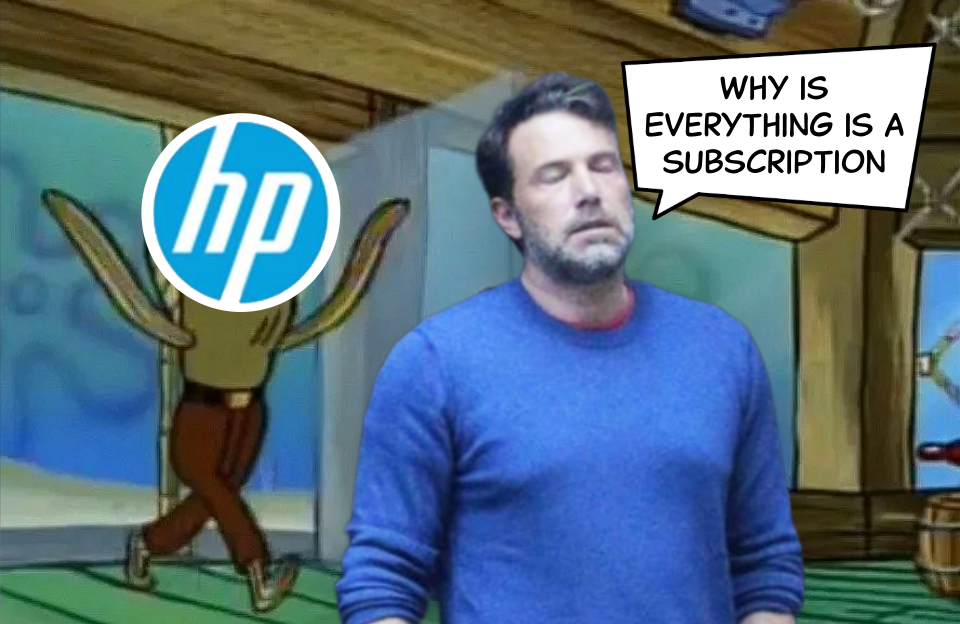
While customers are relatively limited on the steps they can take to combat this, they still have the ability to question whether this model should be what the consumer ecosystem moves towards. As time moves on, companies from every sector are eyeing a transition to subscription-based models. Recently, Hewlett-Packard has received fire because of their Instant Ink monthly subscription plans locking customers out of using their printers. How long until the entirety of goods and services must be rented? How long until customers truly don’t ‘own’ anything?